
The first webinar of the Historic Cities 3.0 project, entitled ‘New cultural tourism spaces in historic cities: where sustainability meets creativity’, is behind us. The event took place on 28 October 2025 as part of the SCT HUB – Codesign the Future of Sustainable Cultural Tourism initiative, which aims to co-create the future of cultural tourism based on sustainability, innovation and dialogue.
The meeting was opened by Natalia Kulec-Greń, Director of the Tourism Department of the Krakow City Hall, who emphasised that the SCT HUB project is a space for the exchange of knowledge and experience between historic cities. The discussion was moderated by Piotr Zmyślony, Ph.D., professor at the Poznań University of Economics, who led discussions with representatives of four European cities – Krakow, Poznań, Alba Iulia and Venice.
The keynote speaker at the meeting was Dr Melanie Kay Smith from Budapest University of Economics and Business, who spoke about the relationship between creativity, sustainability and technology in historic cities. In her speech, she pointed out that contemporary cultural tourism cannot be limited to the preservation of monuments – it should become a tool for building quality of life, social ties and urban well-being.
Using the examples of Budapest, Berlin, Amsterdam and Lisbon, she showed that cities are increasingly moving away from large, costly infrastructure projects to actions based on cooperation, local creativity and dialogue with citizens. She pointed out that the development of technology in tourism – such as mobile apps, interactive maps or digital heritage trails – should support, not replace, direct human experience and contact with culture.
As Dr Smith emphasised, a truly ‘smart city’ is not a city overloaded with technology, but one that can intelligently and empathetically manage its own heritage. “Culture is not a luxury – it is a staple of everyday life, an element that makes an urban space unique and memorable,” she said. She concluded by reflecting that it is Central and Eastern Europe – with its complex history, creativity and community involvement – that has a unique opportunity today to show how to combine tradition and modernity in a sustainable and open way.
Paweł Szczepanik, Plenipotentiary of the President of the City of Krakow for Cultural Affairs, presented the city’s wide cultural offer, emphasising its status as a UNESCO City of Literature and one of the most important cultural centres in Europe. He discussed the rich calendar of festivals – from music to literature – which not only attract visitors from all over the world, but also support the development of the local arts scene.
In his presentation, he highlighted the importance of tourism to the city’s economy – a significant percentage of Krakow’s GDP is generated by this sector. Visitors to Krakow value its atmosphere, hospitality and diverse attractions. The city is currently working on updating its policies – on tourism and culture – which increasingly take into account the voice of residents.
He also pointed to new developments – Nowa Huta, Zabłocie and Wesoła – areas that Krakow is gradually transforming into creative, green meeting spaces, combining culture, art and recreation.
Bartosz Małolepszy from the Poznań Heritage Centre presented the Fest Fyrtel project, dedicated to three 19th century districts of Poznań – Łazarz, Jeżyce and Wilda. The initiative aimed to discover their identity and history through the experiences of the residents themselves.
The project included workshops in which participants created ’emotion maps’ and ‘sense maps’ of neighbourhoods, gave them personalities and developed stories about selected places and characters. The result was a publication documenting the whole process and a series of brochures promoting each neighbourhood.
Today, Fest Fyrtel functions as a long-term programme of cultural and educational activities, with walks, shop window exhibitions, intergenerational initiatives and artistic reinterpretations of old postcards and photographs. As Małolepszy stressed, the key is to build a bond with the place and encourage Poznań residents to become ‘tourists in their own city’.
Representing the Romanian city of Alba Iulia, Andreea Mitrofan-Rădoiuspoke about the process of revitalising the historic centre and fortress of Alba Carolina. Thanks to investments co-funded by the EU, the city has been transformed into a vibrant centre for cultural tourism, combining heritage conservation with modern infrastructure.
Alba Iulia, with a history of more than 2000 years, is today not only a place of national remembrance, but also an example of how local heritage can become a driving force for development. The restored fortress spaces, numerous historical festivals and educational projects make the city a model for combining tradition, technology and social activity.
Brigida Pagani, head of the Sustainable Tourism Department in Venice, presented initiatives to promote authentic, responsible cultural tourism. Among them were projects promoting local crafts, gastronomy and cinema – the three pillars of Venetian identity.
The Slides Project has created ten tours covering the studios of 28 Venetian artisans, made available on the Venezia Unica platform. The city also promotes its culinary heritage through the three-day ‘Saor’ festival, bringing together more than 100 events and workshops. At the same time, a project is underway to modernise the historic Cinema House, which is to become the new cultural centre of the film lagoon.
Pagani also presented activities co-financed by the Italian Ministry of Tourism – the Italian Craft Fair in the historic Arsenale and the UNESCO Information Point in the Forte Marghera, which offers visitors a multimedia experience showcasing the heritage of Venice and its lagoon.
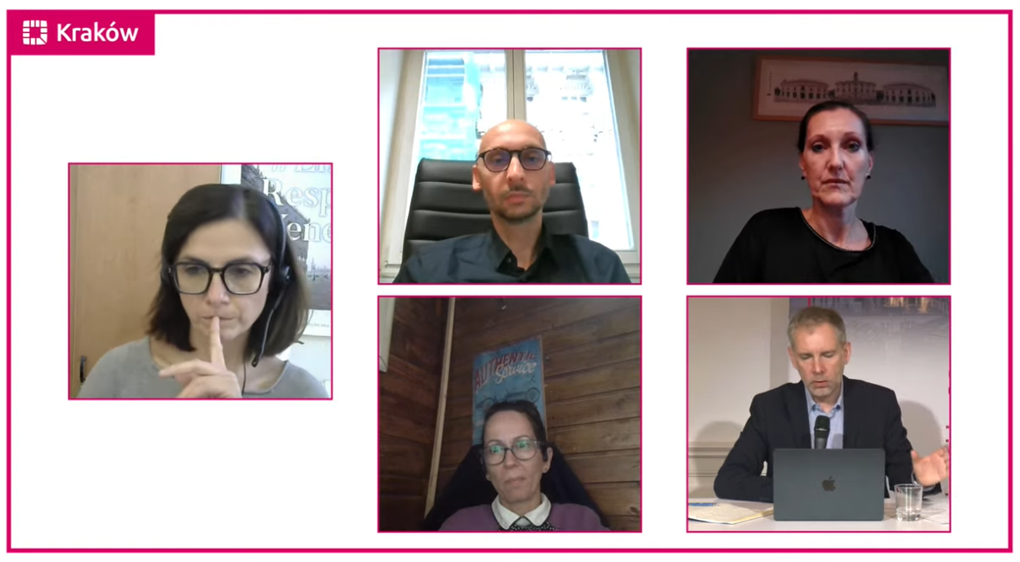
During the ‘Cities Talking’ panel discussion, participants discussed how historic cities can develop tourism in a way that combines the interests of residents, visitors and local government. The discussion resulted in an initial list of good practices and actions to avoid.
✅ What to do:
🚫 What to avoid:
It was emphasised that an effective tourism policy should be based on long-term thinking and partnership with local residents. Local communities are increasingly consciously shaping their surroundings, so their voice must be heard in planning processes. The conversation also included threads on the idea of the ’15-minute city’, the importance of cultural education and supporting local entrepreneurs, craftspeople and neighbourhood initiatives.
Participants agreed that the city should be created first and foremost for the people, and that tourism should be developed to support the local community, protect the authentic character of places and foster their sustainability.
Work on the full list of recommendations for participating cities is still underway – keep an eye on our news.
